-
Maryland Flag
Regular price $21.34 USDRegular priceUnit price per$0.00 USDSale price $21.34 USD -
Maryland Sweatshirt
Regular price $34.15 USDRegular priceUnit price per -
Maryland Backpack
Regular price $59.79 USDRegular priceUnit price per -
Maryland Pillow
Regular price $22.65 USDRegular priceUnit price per -
Maryland Mug
Regular price $11.65 USDRegular priceUnit price per -
Maryland Trucker Cap
Regular price $14.90 USDRegular priceUnit price per -
Maryland Leather Patch Hat
Regular price $18.85 USDRegular priceUnit price per -
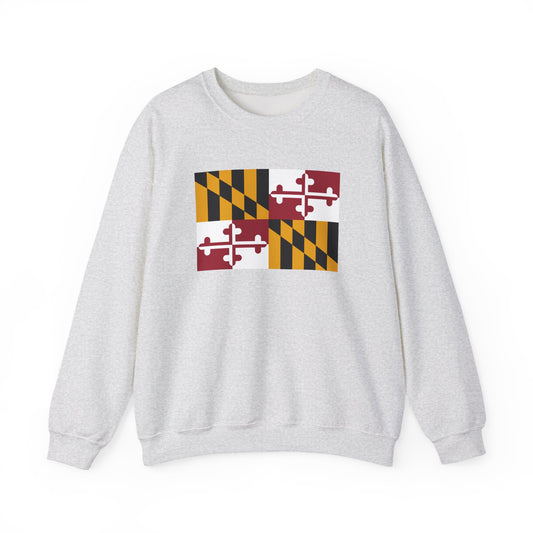
Maryland Flag Sweatshirt
Regular price $34.15 USDRegular priceUnit price per -
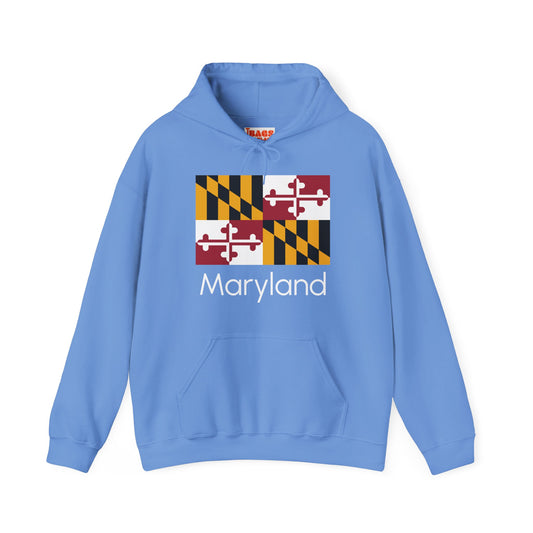
Maryland Hoodies
Regular price $34.40 USDRegular priceUnit price per -
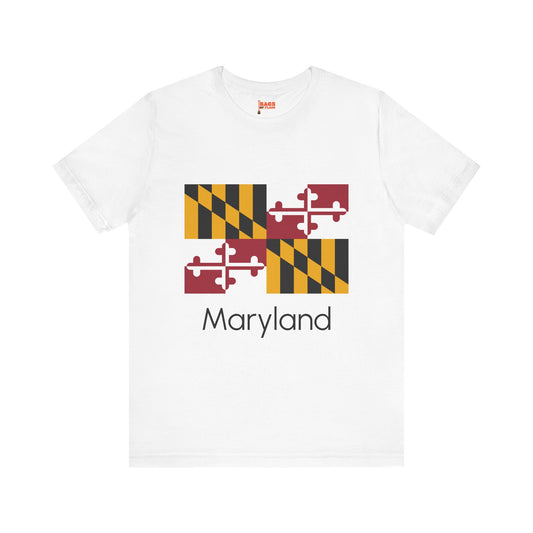
Maryland T-shirts
Regular price $22.79 USDRegular priceUnit price per -
Maryland Flag Hoodies
Regular price $34.40 USDRegular priceUnit price per -
Maryland Flag T-shirts
Regular price $22.79 USDRegular priceUnit price per -
Maryland State Flag
Regular price From $34.12 USDRegular priceUnit price per -
Maryland State Flag – Polyester Printed Banner
Regular price From $37.06 USDRegular priceUnit price per













Collection: US State: Maryland State Flag MD Flag
The Maryland state flag is a distinctive quartered design that combines the heraldic colors and symbols of the Calvert and Crossland families, making it one of the most recognizable state flags in the United States. For readers interested in Maryland history, flag symbolism, state pride, or proper flag use, this guide explains the flag’s design and colors, the history behind it, the meanings tied to its imagery, and the protocols and relevance that keep it central to Maryland’s identity today.
Overview of the Maryland Flag's Design and Gold and Black Colors

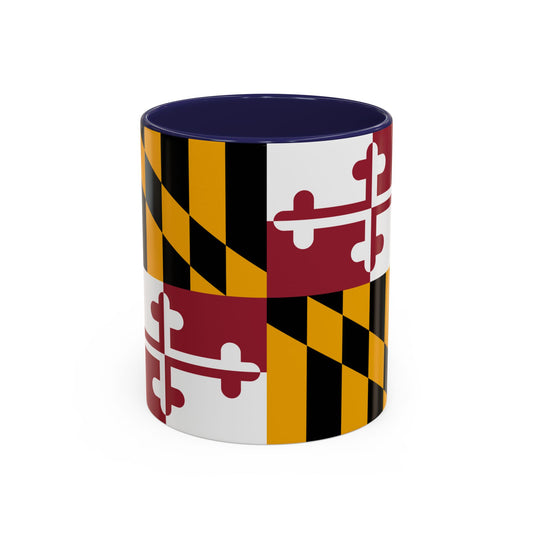
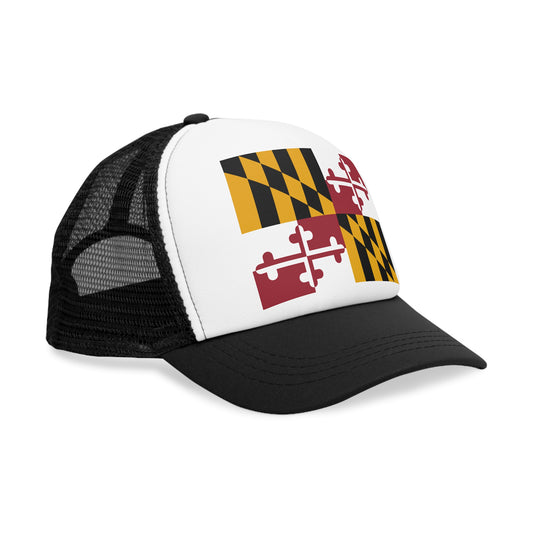
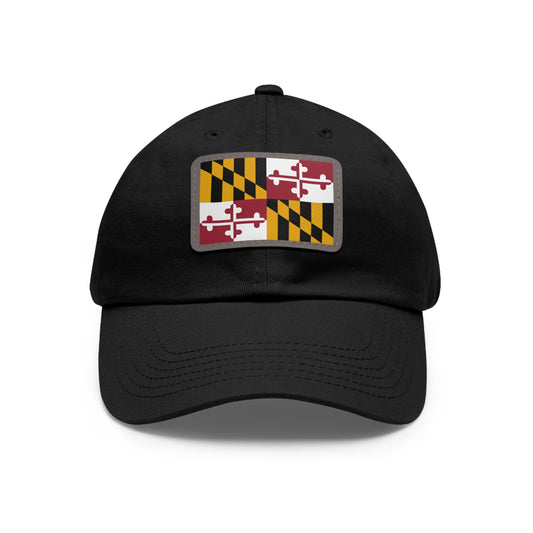
The flag of Maryland is distinguished by its intricate pattern and bold palette, drawing directly from the heraldic banners of the state's founding families, the Calverts and the Crosslands. Its design is a quartered field with four distinct sections, showcasing an interplay of colors and symbols that hark back to nobility and heritage. The Calvert family's influence is evident in the alternating black and gold areas in the first and fourth quarters, featuring a pattern of six vertical bars and a diagonal band.
Red and White
The second and third quarters of the Maryland flag prominently feature the red and white colors of the Crossland family. These quarters display a quartered field of red and white, charged with a cross bottony counterchanged—a Christian cross with trefoil ends, where the colors of the cross and background alternate. The red and white colors are rich in symbolism, representing sacrifice and resilience. Historically, these colors were adopted by Confederate sympathizers during the Civil War, serving as a symbol of resistance and identity for Marylanders aligned with the Confederacy.
Crossland Colors
The Crossland colors of red and white, along with the distinctive cross bottony, are derived from the maternal lineage of the Calvert family. Alicia Crossland, the mother of George Calvert, the first Lord Baltimore, brought these arms into the family heraldry. The cross bottony itself carries religious connotations in English heraldry, symbolizing faith and commitment. The inclusion of these colors and symbols in the Maryland flag signifies the importance of the Crossland family and acknowledges the state's complex history, particularly its divided loyalties during the Civil War.
Historical Context of the Maryland Flag During the Civil War
Officially adopted on March 9, 1904, the Maryland flag has roots deeply entrenched in the early history of the American colonies. The origin of its design traces back to the 17th century, closely associated with the heraldic symbols of the Calvert and Crossland families. During the colonial period, the Calverts were Maryland’s colonial proprietors who founded Maryland, and the state predominantly used the Calvert family's colors and design as its symbol. It was not until after the Civil War that the flag incorporated the Crossland family's red and white motif. The crossland colors were used by confederate sympathizers during the Civil War. This change was symbolic of Maryland's desire for reconciliation and unity post-conflict.
This evolution in design reflects Maryland's journey through critical periods of American history, marking the flag as a living document that encapsulates the state's complex past. Including the Crossland emblem was a deliberate move to acknowledge all facets of Maryland's heritage, symbolizing a step toward healing the divisions that had fissured the state during the Civil War. The first mention of a Maryland state flag appeared in 1817. The design was first flown in 1876 at the Centennial Exposition, then first publicly used in 1880 and at Gettysburg in 1888. The adoption of the flag in the early 20th century came when there was a growing movement to formalize state symbols across the United States. This period saw the flag becoming a potent symbol of Maryland's identity and history. This adoption, therefore, not only solidified the visual representation of Maryland's legacy but also reinforced the state's commitment to unity and reconciliation among its people.
Symbolism Embedded in the Maryland Flag
The vivid and complex design of the Maryland flag is steeped in rich symbolism, each quadrant narrating a piece of the state's heritage. The black and gold quarters come from the Calvert coat of arms, honoring George Calvert, the first Lord Baltimore and founding father of Maryland. These colors, originating from his title as Baron Baltimore, symbolize his vision of Maryland as a refuge for English Catholics and represent wealth and power. Conversely, the red and white portions of the flag draw from the Crossland arms, the maternal lineage of the Calverts, with a Greek cross in heraldic form to symbolize sacrifice, resilience, and the courage of conviction. The inclusion of the bottony cross, traditionally associated with Christian symbolism, signifies faith and commitment.
This integration of the black-and-gold and red-and-white elements as the Calvert and Crossland arms combined does more than just unite familial heraldry; it encapsulates Maryland's identity, blending tradition with ideals of nobility, bravery, and perseverance. The juxtaposition of these elements within the flag constantly reminds us of the state's founding principles and journey through reconciliation and unity. Through its colors and patterns, the Maryland flag embodies a visual story of its past, celebrating the diversity and resilience that define the state. Maryland's flag is the only U.S. state flag based entirely on heraldic emblems.
Relevance of the Maryland State Flag Today
Today, the Maryland flag is deeply woven into the fabric of state identity, appearing at numerous state functions, national events, and military ceremonies. It serves as a powerful emblem of Maryland's history, unity, and pride. The flag's presence on these occasions underscores its importance as a symbol of the state's ongoing legacy and its role in fostering a sense of community among Marylanders. The flag is also common at various sporting events and public buildings, and even on state flag hoodies and apparel, showcasing the strong local allegiance to this iconic emblem.
Despite its widespread acceptance and use, the flag has sparked debate, particularly regarding the historical contexts of its symbols. These discussions reflect a broader national conversation on heritage and representation, highlighting the flag's role as a symbol of state pride and as a catalyst for dialogue on Maryland's historical narratives and values. As such, the Maryland flag remains a topic of interest and significance, bridging past and present while inviting reflection on the state's future.
Additional Facts, Protocols, and Officially Adopted Status Related to the Flag of Maryland
When displaying the Maryland flag in formal settings, especially on government buildings, established guidelines ensure its respectful presentation. The flag should be displayed to prevent it from touching the ground, a practice common to all flags as a sign of respect. Additionally, when flown alongside the national flag of the United States, the Maryland flag must be positioned at a lower height in keeping with the broader hierarchy and protocol for displaying American and state flags, acknowledging the precedence of the national flag. For official protocol, the only permitted ornament atop a flagstaff displaying the Maryland state flag is a gold cross bottony. This rule applies to formal state display standards rather than everyday private use. Moreover, the flag of Maryland is distinguished by its direct connection to British heraldry, a legacy of the state's colonial past, and the influence of the founding families, setting it apart from many other North American flags whose designs emerged from different historical contexts.
This unique heritage makes it one of the few state flags in the United States, with designs rooted in European traditions. Another noteworthy aspect is the specific law that dictates the correct proportions and design of the flag, while also guiding official display details to ensure uniformity in its representation across various uses. This attention to detail underscores the importance of the flag as a symbol of Maryland's identity and heritage, governing how it is showcased in formal settings and everyday displays of state pride, whether on public buildings, clothing, or state flag pillows and home décor. Official color specifications are also maintained through Pantone standards, with the Maryland Secretary of State serving as custodian of those standards.