-
You Are Not Forgotten Flag
Regular price $19.75 USDRegular priceUnit price per$0.00 USDSale price $19.75 USD -
POW/MIA Eagle Flag – Honoring America’s Missing Soldiers
Regular price $35.80 USDRegular priceUnit price per -
You Are Not Forgotten POW MIA Flag
Regular price From $33.74 USDRegular priceUnit price per



Collection: POW/MIA Flag

The POW/MIA flag is one of the most powerful and enduring symbols of American military sacrifice. Designed to honor and remember prisoners of war (POWs) and those missing in action (MIAs), the flag is a solemn reminder of the service members who have not returned home.
History and Origins
The POW/MIA flag was created in 1971 by artist Newt Heisley, a World War II veteran and commercial artist. Commissioned by the National League of Families of American Prisoners and Missing in Southeast Asia, the flag was designed during the Vietnam War era in response to growing concern over the fate of unaccounted-for U.S. service members.
The design quickly gained recognition and was eventually adopted for official display by various U.S. government and military institutions.
Symbolism
-
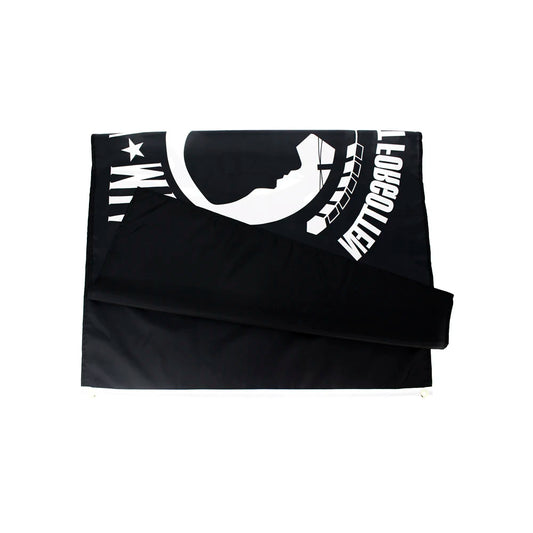
Black Background: Represents the sorrow, solemnity, and unresolved loss associated with POW/MIAs.
-
White Circle with Silhouette: Features the profile of a man, symbolizing the missing; behind him are barbed wire and a guard tower, representing imprisonment and vigilance.
-
Words "POW*MIA": Placed above the image as a stark identifier.
- "You Are Not Forgotten": A solemn pledge of remembrance and national commitment.
Official Recognition
The United States Congress passed legislation in the 1990s requiring the flag to be flown on several national observances, including:
- National POW/MIA Recognition Day (third Friday in September)
- Armed Forces Day
- Memorial Day
- Flag Day
- Independence Day
- Veterans Day
It must also be displayed at key federal facilities, including the U.S. Capitol, military cemeteries, and Department of Veterans Affairs offices.
Modern Relevance
The POW/MIA flag continues to be flown across the country, from public buildings and military bases to private homes and veterans’ organizations. It serves not only as a symbol of past conflicts but also as a continued call for accountability and remembrance.
There are still tens of thousands of Americans unaccounted for from World War II, the Korean War, the Vietnam War, the Cold War, and more recent conflicts. The flag stands as a visual commitment to bring them home.
Flag Etiquette
- The POW/MIA flag should be flown below the U.S. flag if displayed on the same pole.
- It may also be displayed indoors or at memorials, especially on designated national observances.
- The flag is never to be flown above the U.S. flag.