
-
Yakama Leather Patch Hat
Regular price $18.85 USDRegular priceUnit price per -
Yakama T-shirt
Regular price $22.79 USDRegular priceUnit price per -
Yakama Pillow
Regular price $22.65 USDRegular priceUnit price per -
Yakama Mug
Regular price $11.65 USDRegular priceUnit price per -
Yakama Sweatshirt
Regular price $34.15 USDRegular priceUnit price per -
Yakama Hoodies
Regular price $34.40 USDRegular priceUnit price per






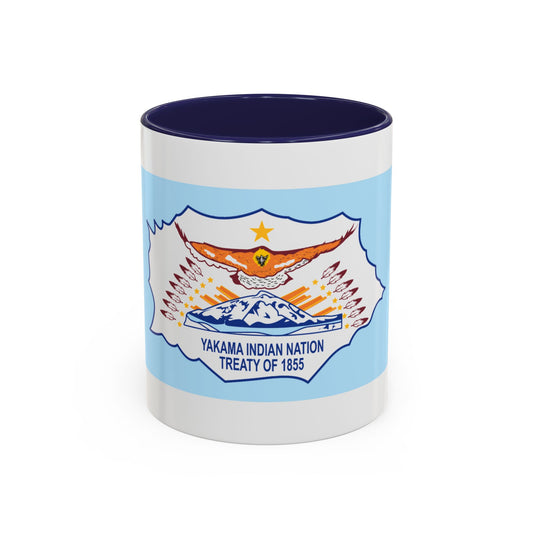




Collection: Yakama Nation Flag: Native American Flags
Honor the spirit, heritage, and strength of the Yakama Nation with our carefully curated collection of flags and flag merchandise. This page is dedicated to celebrating the cultural legacy of the Yakama people through beautifully designed flags, apparel, and collectibles that reflect their enduring traditions and symbols. If you're interested in exploring flags from other nations, you may also want to learn about the Chinook Nation or the Sioux Tribe Flag and its significance.
The Yakama Nation: Guardians of the Columbia Plateau

The Yakama Nation is made up of 14 confederated tribes and bands united under the Treaty of 1855. This treaty, known as the Treaty with the Yakama, was a pivotal agreement that shaped the tribe's future. Their ancestral lands cover the Columbia Plateau in what is now south-central Washington State. Much of this land became a ceded area transferred to the U.S. government through the treaty, though the tribe retained certain rights. The Yakama Nation Tribe have lived in this region since time immemorial, utilizing the entire land base—from the lowlands around the Columbia River to the snow-capped Cascade Mountains.
The Yakama Nation Tribe are deeply connected to the land and waterways, especially the Columbia River, which has been central to their fishing, hunting, and gathering traditions. Salmon fishing, in particular, remains a cornerstone of their culture and sustenance.
During the Yakima War, Chief Kamiakin called upon his people to resist the encroachment of settlers and military forces. As reciprocal atrocities unfolded between the Yakama and the U.S. military, the war continued until 1859. The final phase, known as the Couer d'Alene War, marked the end of organized resistance and led to the Yakama Nation's acceptance of their reservation. Like other reservations established through treaties, this land became a symbol of the tribe's sovereignty and enduring connection to their homeland.
The treaty included various tribes in the confederation, though today only a few members of some groups remain. These tribes continue to reside on the reservation, maintaining their traditions and presence in the region.
The flag adopted in 1955 to represent the Yakama Nation has evolved over time. Both the present and current Yakama Nation Tribe flags feature design elements that honor the tribe's history and identity. The feathers represent the fourteen chiefs who signed the treaty, while the fourteen stars represent the fourteen bands of the Confederated Tribes and Bands of the Yakama Nation. The sacred eagle is depicted to emphasize its spiritual importance, and Mount Adams is shown as an impressive mountain central to the tribe's heritage. The morning star is a symbol of guidance and leadership, arcing above the mountain.
The Yakama Nation Tribe flag's history includes contributions from Don Healy, Elmer's Flag, and a sample flag provided during the design process. Akwesasne notes highlight the historical background, cultural significance, and symbolism associated with the Yakama Nation Tribe flag. The Toppenish Long House remains an important cultural site for the Yakama Nation Tribe.
In the 1990s, the Yakima Nation renamed itself the Yakama Nation to more closely reflect the proper pronunciation and honor the tribe's native language and identity. The tribe's sovereignty and connection to their land remain central to their governance and cultural practices.
Today, the Yakama Nation continues to uphold its cultural traditions while engaging in contemporary governance and economic development. The Nation operates under a tribal council system, with elected representatives from each of the 14 tribes and bands. The Yakama Nation is recognized as a federally recognized tribe and maintains its nation status.
Yakama Land and Reservation: Heart of the Nation
The Yakama Nation’s land and reservation lie at the heart of the nation, spanning approximately 1,130,000 acres in southwestern Washington State. This vast expanse, known as the Yakama Reservation, is home to the Yakama Indian Nation—a confederated group of tribes and bands with a deep-rooted history in the region. The reservation was established following a treaty signed in 1855 between Governor Isaac Stevens of the Washington Territory and representatives from the Yakama, Nez Perce, Cayuse, Umatilla, Wallawalla, and other tribes. While the treaty was intended to secure the tribes’ rights to their ancestral lands, its terms were quickly violated when Indian lands were declared open to white settlers just days after the treaty signing. This breach sparked a series of counter raids and reciprocal atrocities, igniting the Yakima War.
The Yakima War, marked by intense conflict and hardship, lasted until 1859, culminating in the last phase known as the Couer d’Alene War. Despite the turmoil, the Yakama Nation ultimately accepted the reservation boundaries and have continued to reside on these lands ever since. The Yakama Nation Tribe flag, adopted in 1955, powerfully symbolizes this enduring connection. The flag features the borders of the Yakama Reservation outlined in white against a sky blue background, with an eagle soaring above the impressive and sacred Mount Adams—a mountain that lies partly within the reservation and holds deep spiritual significance for the Yakama Nation. The eagle, revered as sacred, represents the tribe’s way of life, including their fishing traditions along the Columbia River and its tributaries.
Central to the Yakama Nation Tribe flag's design are fourteen eagle feathers honoring the fourteen chiefs who signed the 1855 treaty, as well as fourteen gold stars representing the confederated tribes that make up the Yakama Nation. These symbols pay tribute to the leadership, unity, and resilience of the Yakama Nation. In the mid-1990s, the tribe officially changed its name from “Yakima” to “Yakama” to better reflect the proper pronunciation in their native tongue, underscoring their commitment to cultural preservation.
Today, the Yakama Nation continues to thrive as a confederated tribe, with members from the Yakama, Palus, Wenatchi, Klickitat, and other bands. Their connection to the land remains sacred, with the Cascade Mountain Range and the Columbia River providing both natural beauty and vital resources. The Yakama people’s history—from the signing of the treaty to the challenges of the Yakima War and beyond—is honored and remembered through the symbols on their current flag, a lasting emblem of their heritage, sovereignty, and enduring spirit.
Yakama Nation Tribe Flag: Symbolism and Design
The present flag of the Yakama Nation is rich in symbolism, reflecting the unity and heritage of the 14 confederated tribes and bands.
The Yakama Nation Tribe flag features:
-
Fourteen eagle feathers: Representing the 14 chiefs who signed the Treaty of 1855, symbolizing leadership and the foundation of the Yakama Nation tribe.
-
Fourteen stars: Denoting the 14 tribes and bands that comprise the Yakama Nation, emphasizing unity and collective identity.
- A central emblem: Showcasing Mount Adams, a sacred mountain, with an eagle soaring above it, symbolizing spiritual guidance and connection to the land.
Together, these design elements honor the Yakama Nation Tribe's history, cultural symbols, and enduring presence in the region, reflecting the broader significance of Native American flags.
Cultural Significance and Modern Presence
The Yakama Nation continues to preserve its cultural traditions through language revitalization, ceremonies, and stewardship of natural resources. The Yakama language, Ichishkíin Sínwit, a northwestern dialect of Sahaptin, is actively promoted among younger generations.
The Yakama Nation Tribe is deeply engaged in environmental conservation, particularly fisheries management, to protect salmon populations and uphold treaty rights. The Yakama Nation Fisheries program works to restore and maintain fish habitats, ensuring the sustainability of this vital resource.
Additional Facts and Protocols
-
Language: Ichishkíin Sínwit (Yakama dialect of Sahaptin).
-
Sacred Sites: Mount Adams (Páhto) holds spiritual significance and is featured on the Yakama Nation Tribe flag.
-
Governance: The Yakama Nation operates under a tribal council system, with representatives from each of the 14 tribes and bands.
- Cultural Practices: The Yakama Nation Tribe maintains traditions such as the First Salmon Ceremony, honoring the return of salmon each year.