-
USA Flag - Heavy Duty Nylon with Brass Grommets
Regular price From $15.66 USDRegular priceUnit price per -
Historic U.S. Flags Including 13-Star Hopkinson Flag
Regular price From $48.46 USDRegular priceUnit price per -
American Flag - Cotton, 5ft x 9.5ft
Regular price $146.25 USDRegular priceUnit price per -
American Flag 3ft x 5ft – Sewn Cotton
Regular price $56.92 USDRegular priceUnit price per -
Martin Luther King Flag – Tribute to a Civil Rights Icon
Regular price From $43.20 USDRegular priceUnit price per -
Heritage US Flag - 3ft x 5ft Cotton
Regular price $126.75 USDRegular priceUnit price per$109.99 USDSale price $126.75 USD -
American Flag - Come on America
Regular price From $33.74 USDRegular priceUnit price per -
American Flag – 3x5 FT Outdoor US Flag
Regular price $45.20 USDRegular priceUnit price per -
American Flag - Superknit Polyester 3ft x 5ft with Grommets
Regular price $44.54 USDRegular priceUnit price per -
American Flag 3ft x 5ft – Spun Polyester for Maximum Durability
Regular price $60.92 USDRegular priceUnit price per -
Folded US Memorial Flag - Premium Cotton for Veterans
Regular price $145.31 USDRegular priceUnit price per -
American Flag 12x18 Inch
Regular price $96.55 USDRegular priceUnit price per -
American Flag for Flag Display Case - 3ft x 5ft Cotton
Regular price $59.99 USDRegular priceUnit price per -
American Flag - 3ft x 5ft Sewn Cotton
Regular price $70.62 USDRegular priceUnit price per -
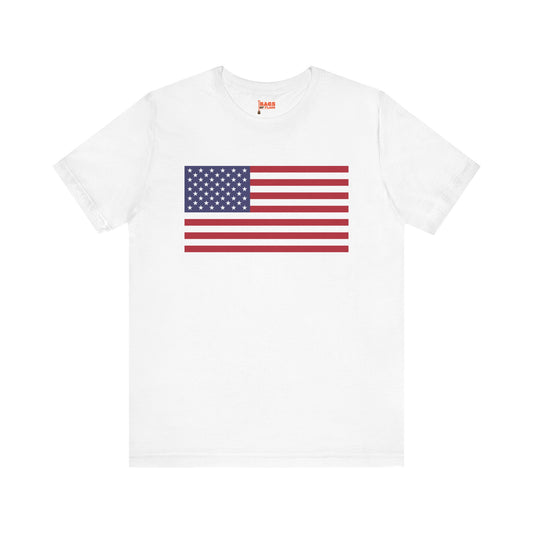
United States of America Flag on T-shirt
Regular price $22.79 USDRegular priceUnit price per -
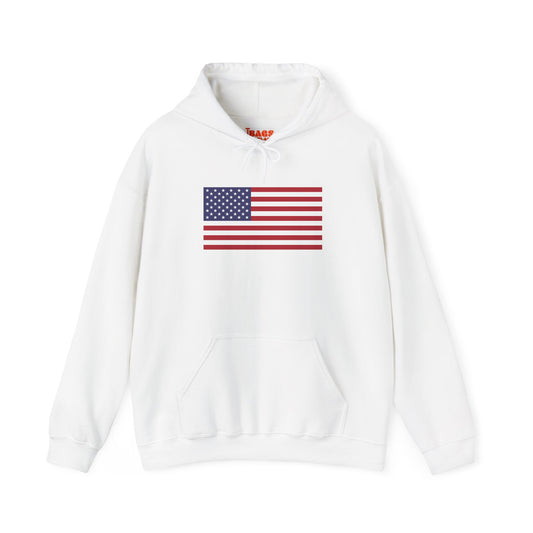
United States of America Flag Hoodies
Regular price $34.40 USDRegular priceUnit price per -
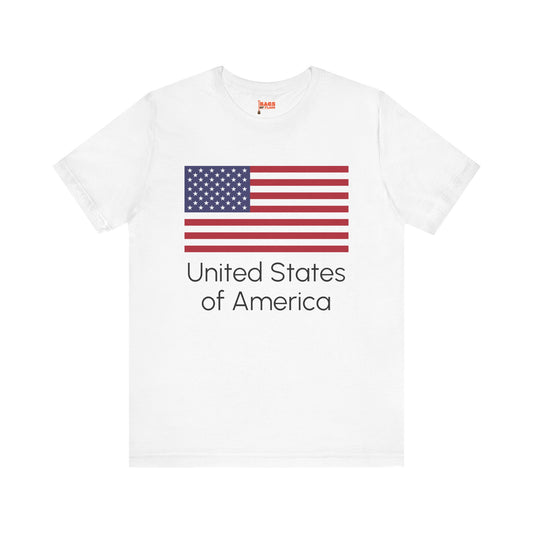
United States of America T-shirts
Regular price $22.79 USDRegular priceUnit price per -
United States of America Hoodies
Regular price $34.40 USDRegular priceUnit price per -
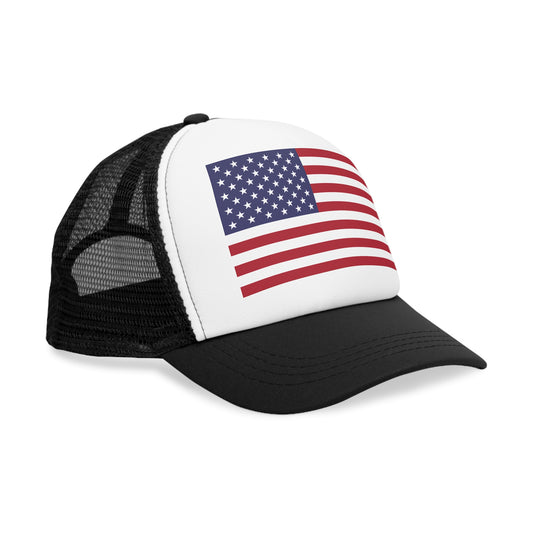
United States Trucker Cap
Regular price $14.90 USDRegular priceUnit price per






Collection: American Flag United States
The American flag, also known as the Stars and Stripes, is the national flag of the United States, featuring thirteen horizontal stripes and fifty white stars on a blue canton that represent the original colonies and the current states in the Union. For students, educators, patriots, and anyone curious about American national symbols, it remains a powerful emblem of the nation's identity, values, unity, and democratic principles.
Here, we explore the American flag’s design and symbolism, its history and evolution, its cultural and national significance, proper display etiquette, and a few notable facts that help explain why it still matters in national observances, civic life, and everyday expressions of patriotism.
Overview of the Official Flag of the USA

The distinctive design of the United States flag consists of thirteen horizontal stripes, with seven red and six white stripes that alternate. These stripes represent the original thirteen colonies that broke away from British rule. Anchoring the flag's canton is a blue rectangle, the blue background behind the stars, punctuated by fifty white stars, each representing a state in the Union. This layout has become an enduring symbol of the country's unity, diversity, and democratic principles.
The colors and symbols on the flag weave together the story of America's past, aspirations, and enduring values. The configuration of stars has seen adjustments as the nation expanded, reflecting the dynamic nature of the United States' growth and the inclusivity of its promise. This visual emblem encapsulates the nation's resilience and constant striving towards a more perfect union.
Historical Context of the USA Flag
The journey of the USA flag, often referred to as the Stars and Stripes, began amidst the fervor of independence and the quest for a national identity. On June 14, 1777, the Continental Congress passed a resolution establishing an official flag for the new nation, signaling a break from the past and forging a new, unified identity. That resolution is central to the flag’s origin and described the stars as a “new constellation.” This date, now celebrated annually as Flag Day, marks the beginning of the flag's storied history which parallels the country's journey.
Initially, early national designs associated with the first American flag featured thirteen stripes and thirteen stars representing the original colonies. Betsy Ross is often mentioned in the debated story of that early design, though the historical record is not definitive. As the nation expanded westward and welcomed new states, the flag's design evolved. The first flag flown in battle is widely tied to Fort Schuyler on August 3, 1777. Adding new stars—and occasionally stripes—reflected the growing tapestry of the American nation. A significant change came in 1818 when Congress passed an act fixing the number of stripes at thirteen to honor the original colonies and decreeing that a new star be added for every new state on the 4th of July following its admission.
The U.S. flag has been modified 26 times since 1777. The 48-star version flew from 1912 to 1959, and the 50-star banner became the final design on July 4, 1960, after Hawaii joined the Union. This evolution of the flag's design highlights the United States' adaptability and forward-looking spirit. It embodies the ideals of liberty and unity that fueled the nation's birth and continues to guide it today. Through wars, expansions, and the test of time—including the Civil War—it has remained part of broader American history. Its story also lives on through the Star-Spangled Banner, which later became the national anthem. The current design has remained in use since 1960.
The Symbolism of the Stars and Stripes

The colors and design elements of the USA flag are imbued with rich symbolism that reflects the nation's core values and principles. The red in the flag's stripes, known officially as Old Glory Red, evokes a sense of valor and hardiness, qualities essential to the country's spirit of independence and courage in the face of challenges. White, interspersed among the red, stands for purity and innocence, with the white stripes representing the original 13 colonies and symbolizing justice and integrity underpinning American democracy.
The blue in the flag's canton symbolizes vigilance, perseverance, and justice, representing the constant vigil and enduring perseverance required to uphold democratic values and liberty. Each star on the blue field represents a state in the union, embodying the unity of the states within a single nation, striving towards common goals and ideals. This collective symbolism serves as a reminder of the country's founding ideals and an ongoing commitment to the principles that define the United States.
Current Relevance of the USA Flag
In contemporary America, the USA flag continues to hold a central place in the nation's consciousness, serving as a potent symbol at various events ranging from solemn national observances to spirited sporting occasions. It adorns classrooms, public buildings, and private residences, and even everyday apparel like a USA flag shirt featuring the American flag on a T‑shirt, as a daily reminder of the nation's ideals and the sacrifices made to protect them. People also fly it at homes and on buildings, and if it is flown at night it should be illuminated. It should also be raised briskly and lowered ceremoniously. The flag is especially prominent in military contexts, where it symbolizes honor, loyalty, and the commitment of service members who operate under its banner, both at home and abroad, alongside the many military flags representing specific branches and units.
The flag's presence in today's society extends beyond physical displays, permeating cultural expressions and public discourse. It is often central to discussions about national identity, freedom of expression, and the values Americans hold dear. Widely recognized flag etiquette also holds that it should never be used for advertising purposes. These discussions can sometimes be contentious, reflecting the diverse perspectives within the United States. For instance, acts such as flag burning, intended by some as political protest, spark debate about the limits of free speech and the nature of patriotism.
Despite these debates, or perhaps because of them, the flag remains a unifying force for many, embodying the resilience and diversity of the American people. It continues to inspire a sense of belonging and loyalty among citizens, reflecting the nation's past struggles and hopes for the future. Its symbolic reach is underscored by the fact that it has been planted at the North Pole and atop Mount Everest. The flag was also planted on the lunar surface during the Apollo 11 moon landing in July 1969, a milestone that resonates with today’s US Space Force flags and banners celebrating space defense and exploration.
Additional Facts and Flag Etiquette About the USA Flag
Displaying the flag of the United States comes with respected guidelines set out in the United States Flag Code that underscore its significance. Among these, it's considered a sign of disrespect for the flag to make contact with the ground. When the nation is mourning, the flag is flown at half-staff as a mark of solemn respect. In ceremonial indoor display settings, formal flags are typically fully sewn. Flag dips are not permitted for the American flag except in limited naval tradition contexts, and when flown with state or other flags it follows a clear hierarchy and display protocol. Additionally, when the flag is not being displayed, it should be folded precisely, resulting in a triangular shape with only the blue field and stars visible, embodying the country's perseverance and justice. The American Legion commonly conducts flag retirement ceremonies. Common materials include nylon, polyester, and cotton. Typical sizes include 3x5 ft and 4x6 ft. Flags are often made to the 1.9 ratio for federal government specifications.
A lesser-known fact is the tradition of adding a star for every new state, which ceased altering the number of stripes to maintain the symbolic representation of the original thirteen colonies. The scale of patriotism has also been showcased through monumental displays, with one of the most impressive being a huge flag that stretched over 225 feet by 505 feet, unfurled in a breathtaking display of national pride over the George Washington Bridge. This immense representation of the flag not only highlighted the unity and strength of the nation but also set a record that mirrors the expansive spirit of America. Patriotic banners and flag pillows used as decorative accents are also popular for outdoor decor.