-
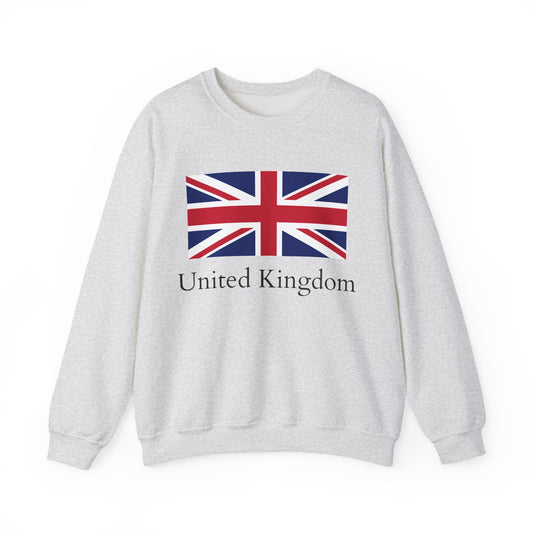
United Kingdom Sweatshirt
Regular price $34.15 USDRegular priceUnit price / perSale price $34.15 USD -
United Kingdom Flag Sweatshirt
Regular price $34.15 USDRegular priceUnit price / perSale price $34.15 USD -
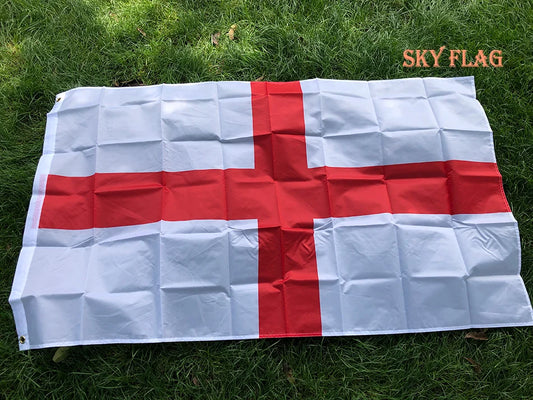
England Pillow
Regular price $22.65 USDRegular priceUnit price / perSale price $22.65 USD -
United Kingdom Pillow
Regular price $22.65 USDRegular priceUnit price / perSale price $22.65 USD -
England Backpack
Regular price $59.79 USDRegular priceUnit price / perSale price $59.79 USD -
United Kingdom Backpack
Regular price $59.79 USDRegular priceUnit price / perSale price $59.79 USD -
England Leather Patch Hat
Regular price $18.85 USDRegular priceUnit price / perSale price $18.85 USD -
United Kingdom Leather Patch Hat
Regular price $18.85 USDRegular priceUnit price / perSale price $18.85 USD -
United Kingdom Mug
Regular price $8.65 USDRegular priceUnit price / perSale price $8.65 USD -
England Flag Sweatshirt
Regular price $34.15 USDRegular priceUnit price / perSale price $34.15 USD -
England Sweatshirt
Regular price $34.15 USDRegular priceUnit price / perSale price $34.15 USD -
England Mug
Regular price $8.65 USDRegular priceUnit price / perSale price $8.65 USD -
England Trucker Cap
Regular price $14.90 USDRegular priceUnit price / perSale price $14.90 USD -
United Kingdom Trucker Cap
Regular price $14.90 USDRegular priceUnit price / perSale price $14.90 USD -
England Flag on T-shirt
Regular price $22.79 USDRegular priceUnit price / perSale price $22.79 USD -
England Hoodies
Regular price $34.40 USDRegular priceUnit price / perSale price $34.40 USD -
England T-shirts
Regular price $22.79 USDRegular priceUnit price / perSale price $22.79 USD -
England Flag Hoodies
Regular price $34.40 USDRegular priceUnit price / perSale price $34.40 USD -
United Kingdom Hoodies
Regular price $34.40 USDRegular priceUnit price / perSale price $34.40 USD -
United Kingdom T-shirts
Regular price $22.79 USDRegular priceUnit price / perSale price $22.79 USD
Collection: Flags Of The United Kingdom
Throughout the history of the British Empire flags have been synonymous with Empire, the ambition of an island nation which at one time ruled over enormous territories. At its peak, there was a proverb that ‘the sun never sets on the British Empire’, and it was true.
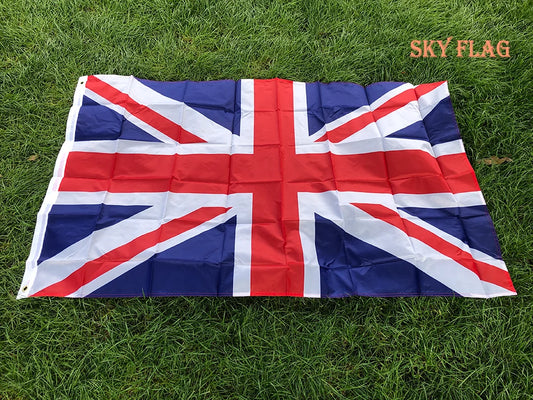
The Union Jack, symbol of one of the largest modern empires, is possibly still the most recognized flag in the world today. It continues to be featured on dozens of flags, including those of former colonies, and even some territories that were never part of the British Empire – Hawaii being one of them!
The characteristic red, white and blue pattern was first adopted in 1606, and displayed the red cross of England superimposed on the white cross of Scotland, against a blue background. This was done for a very specific reason: in heraldry, red and blue are not allowed to border each other because of the tonal similarity, and s the white border was used to separate the two colors. Later, in order to represent all territories forming part of the British Isles, flags were altered to include the diagonal cross of St Patrick, and once again, a clever bit of color division ensured that that the red and blue elements would not meet. It is this white divider (or fimbriation) that makes for a non-symmetrical rendering of a seemingly symmetrical design.
The Union Jack has featured on almost every national flag of the nineteenth and twentieth century, and even after former colonies claimed independence, many of them still chose to incorporate the design features of the British Empire flags into their post-colonial flag designs.
The Union Jack, symbol of one of the largest modern empires, is possibly still the most recognized flag in the world today. It continues to be featured on dozens of flags, including those of former colonies, and even some territories that were never part of the British Empire – Hawaii being one of them!
The characteristic red, white and blue pattern was first adopted in 1606, and displayed the red cross of England superimposed on the white cross of Scotland, against a blue background. This was done for a very specific reason: in heraldry, red and blue are not allowed to border each other because of the tonal similarity, and s the white border was used to separate the two colors. Later, in order to represent all territories forming part of the British Isles, flags were altered to include the diagonal cross of St Patrick, and once again, a clever bit of color division ensured that that the red and blue elements would not meet. It is this white divider (or fimbriation) that makes for a non-symmetrical rendering of a seemingly symmetrical design.
The Union Jack has featured on almost every national flag of the nineteenth and twentieth century, and even after former colonies claimed independence, many of them still chose to incorporate the design features of the British Empire flags into their post-colonial flag designs.